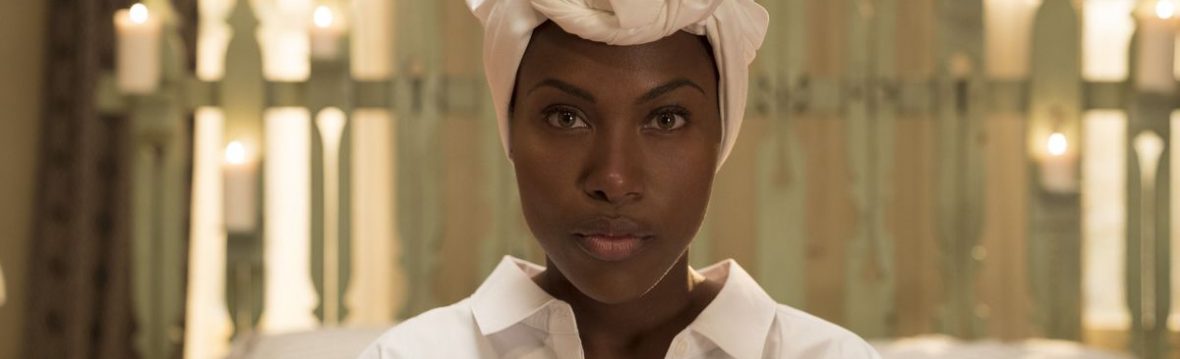
‘Message To Mother’ has been my second time seriously directing a short film. As a whole the production was a success, and a product that I am happy with has been produced and directed to a standard I’m very happy with. A whole different range of aspects from the cinematography to the editing have all been excellent from my team members, and the contributions from my cast have been exceptional. It hasn’t been the smoothest of productions but the experience has been a long, useful learning process. From the beginning, I had hoped to make a film which all young women could relate to and see themselves in as well.
Pre-production phase
Pre-production was the bit in which I, as a director and producer, could properly develop my concept as I had previously done in unit twelve. Upon starting the proposal, it gave me time to re-figure out what my original concept of the film was and start to prepare to organise and shoot this complex idea. It was a good idea to organise and re-establish the idea of ‘Message To Mother’ as over the past months I hadn’t given it much thought. I was still unsure of what the exact concept of my film was even at the time of writing my proposal but after spending time to develop the idea again, it became easier and clearer. The action plan was something which I hoped would be a set schedule more than a plan. I hoped that it would guide me more in the beginning of the production but knew it wouldn’t really be able to be applied later in the shooting weeks as I couldn’t predict what problem would occur in my film, i.e. the availability of contributors and locations etc. The action plan at the start of the production claimed useful as I followed it in in the first couple of weeks, but started to get out-dated as times flew by. I started to make my own schedule as I went along and soon found it easier as I didn’t feel restricted like I was when following the action plan.
The critical contexts blog post was a very descriptive proposal what discusses the type of documentary, who my audience is and what my intentions are. This blog post was meant to give my reasoning for this film to be made more obvious, why it would affect my proposed audience and why I think there’s a gap in the media industry. I explained these points thoroughly throughout the critical contexts blog post, and made sure that the reason why my film should be made was clear. I enjoyed this blog post as it allowed me to go into depth about my production and enable the audience understand the film more. This post definitely put what I wanted to get out of the film more obvious and establish exactly what my film would be to me.
Starting the documents which would be the ones that would make my idea into reality was an exciting thought and is my favourite part of the production process. Every document is one which I had taken care with, to ensure everyone would be safe on-set and the production would run smoothly. I came across a few hiccups along the way, especially about locations. One problem that I could have over-come had I had enough time was to conduct a location recce. Because I hadn’t conducted one, a couple locations seemed rather unfitting like Eleanor’s shooting her bedroom. When I am to do my next project, I will not forget the importance of location recces as they save a lot of time, and are a massive factor in films. This was a mistake by me, which resulted Eleanor’s bedroom shoot looking boring with muted colours, grainy and dark. Also, it was a messy background which made the shot very unattractive. One other thing I could have done in pre-production is research script writing for voice-overs in documentaries. I did struggle with writing a voice-over as I didn’t know how to make a voice-over with context without making it 4 minutes long. If i was to do this film again, it is definitely one thing I would look at during the beginning of the production.
Production – Cinematography
The cinematography in “Message To Mother” I was very pleased with. Many of the shots, especially b-roll shots, looked better than what I had ever thought I could shoot. A lot of the timing for these shoots couldn’t have been better as we never had any hiccups on-set which made the production run smoothly, like bad weather or intense busy locations. I had prepared previously on how to avoid situations where we would be stuck in the rain or in over-crowded places. To make sure we were in the best weather, I kept checking Met Office for local weather updates and predicaments. This was extremely helpful to the production as we manged to avoid every shower of rain. To make sure we were not caught up in any crowd or busy times of the day, I arranged to meet in public places mid-mornings and avoided rush hours. We also avoided high streets and overcrowded and congested pedestrian areas, and opted for quieter places during the day. For example, when shooting Maddie’s b-roll at St. Paul’s Place, no restaurants or bars are open at 10:00am so was the perfect quiet time for shooting, and this was all thought through by me who had planned ahead.
The shot quality of most b-roll shots are exceptional and look professional, which is a comment I had recieved during feedback. A few tweaks could have been changed about many b-roll shots which I will go into detail with. The lighting set-up in many of the shots include using natural lighting, mixed lighting and 3-point lighting technique methods which I had researched about and used to apply in my finished product. Learning about lighting in my pre-production phase definitely was a useful, but more practice could have been effective. Colour-grading proved to be a useful tool, especially in the interviews and some b-roll shots. Colour-grading has enhanced emotions in “Message To Mother” and has been commented on by the peers in my class positively.
All of the interview and script shots have been composed in the way that the subject is mainly in the center of the screen, looking forward to the camera. During the interviews, the subjects looked to the left hand side of the camera (their right). This composition, I thought, looked very good and made to look like a genuine documentary interview. From what research I conducted from lighting techniques, the subjects in the example were all sat rather the same. It is also a documentary technique that I have previously researched. All examples given in my research are interview documentaries and are all techniques are applied in my film. The idea of having them sat in this position allows the audiences eye to focus on the girls’ emotions to enhance the overall feel of the film. I believe the shots have all been done to a high standard but that doesn’t mean there isn’t room for improvement.
One surprising shot that I specifically was impressed by was the b-roll shot of Abigail in a Rape Seed field at Onesacre. The colours were gorgeous, the contrasts and brightness of the shots were beautiful, the setting – also beautiful. The reason I like this particular shot is because of the contrast of colours in comparison of the rest of the shots in my film as they all look very bland and boring in comparison to this specif shot. This shot was filmed at 19:30pm at golden hour when the sun is a orange colour and is a great setting, which maybe is why I loved this shot so much. With Maddie’s shoot of her outside for her interview, though this is a great shot, I think this would have looked even better at sunset as it would have emphasised the look of the shot, and maybe wouldn’t have been such a strong light. If I was to do this film again, I would change all the lighting for all outside shots to be like Abigail’s b-roll shot at golden hour, the shots would look a millions times better. Location, again, was another huge factor of why this shot is one of my favourites as it is exactly how I imagined the shot to look like, this being why this one stands out and the rest of the film doesn’t.
This shot is well composed as the horizon is in the highest third of the shot, and Abigail is in the middle of the screen which is a great place for her to be positioned. The flowers are covering two-thirds of the screen which allows a lot of colour to be shown. Abigail also moves her arms outward which is also a great effect and great use of space. I think that this is the best shot that is in the film as it is very lively and adventurous, and pretty too. It fits in with the film perfectly, and no colour-grading in post-production was even necessary. When shooting this shot, I was looking for a shot which my title could go over, and I had chosen something like this. It was a good choice as the whole title sequence flows together beautifully, and it is such a beautiful shot. It definitely was a shot which that got the audiences attention during screening in class. I didn’t colour-grade this shot as I thought I might not need to, but looking at it now, I would have liked to see what I could have done about the colours in the sky and maybe made the clouds stand out much more, and maybe the orange could be enhanced too. The ISO was on 100 as to control light sensitivity through the lens, the shutter speed was on 50 (as always) and the aperture was at around 9.0.

The first attempt at Eleanor’s shoot was the first shoot for my final major project and looked rather rough, it was a bland, boring shot and perhaps with a little more thought, it could have been perfect the first time. There were many things wrong with her first shoot. Many things went wrong. One problem was the location: her room was obviously too small to shoot any material in, which on my behalf was a wrong decision as I had hadn’t conducted a location recce to make sure that the bedroom was a good location to shoot in. Because her room was so small, I couldn’t find a space beside the camera where when interviewing her she would have a good eyeline Consequently she looks above the camera, which is the last eyeline I want. Her room was so dark, even with two LED lights up, we couldn’t light her interview up anymore than we already had. Again, a mistake in pre-production which led to a re-shoot. In the case of me thinking on my feet, we could have shot in a different room, or even outside in the garden. I didn’t think of this when I was there because I wasn’t open to other ideas at the time. If I was on that location now, I would have realised it wasn’t a suitable location, and if we did, we should have taken the interview outside.
Meanwhile, the composition of Eleanor’s re-shoot was great, she was in the center of the shot, facing forwards, the reservoir was not too overwhelming in the shot, with a green, blossomed tree in the background to give a sense of life. As you can see below, Eleanor’s original shoot was dark, with muted colours and it doesn’t particularly look interesting. The window is blown out due to the bright sky because I learned after to not shoot with a window in shot as the shot just doesn’t look good at all. Instead what we should have done if we had room, was spin the camera anti-clockwise so no window would had been in shot because then the shot quality would have improved immensely and it would have been one less problem. The things in the window do not look attractive to the audience which could also be a distraction from what Eleanor says. Despite all this Eleanor’s original shot was composed well.
Re-shooting Eleanor’s shot was the most satisfying thing I could have done as it ran so much more smoothly, she knew where to look, there’s less crowded space and the shot is brighter. You are not distracted by the background, but instead it fits in with her emotional speech. The re-shooted shot was very yellowish, but with post-production I was able to create a white balanced shot with blue tones and enhanced greens. The feedback on the re-shoot was all positive with peers and tutors, so I am relieved that I decided to re-shoot. I like the composition of the shot, although I think the tripod could have been slightly lower as to be level with her a little more but having her in the central was the plan from the start and I think it would have looked strange as she isn’t in the most stereo-typical interview location.


All of my shots in the film (except for Abigail’s interview and script shot) are all well exposed, white balanced and in focus. For example, Maddie’s interview and script (re-shoot) was well exposed to the natural light, which I believe can be difficult after developing my research knowledge on natural lighting.

Admittedly, in a lot of the interview and script shots, I had used the natural lighting to my benefit as my stylistic choice for “Message To Mother”. Unsurprisingly, I adore natural light due to the well-cast shadows and normality it can create, I think it can look very flattering when filming, and lighting simply cannot go wrong in bright, sunny, natural light (on a clear and cloudy day more problems could occur) – and is why I have used it throughout my film.
When inside on locations like when shooting Tara’s interview and script, we used something called mixed lighting which uses natural light and artificial light to create a natural looking lighting look.
The process of 3 point-lighting is always a challenge for me, especially when using mixed lighting. I was rather pleased that me, and my fellow crew members had managed to set-up a basic – but effective- 3 point-lighting set-up. It looked natural, but the only significant thing was the bright flare on the cupboard to which I hoped I could fool the audience by passing it off as natural light (instead of the bright key light we put up to brighten up Tara more). Using bright lighting in the film was a good decision for my film as I believe that it enables the audience to be enlightened about the message I’m trying to put across. In future productions, I think it will dramatically improve my shots more if I took the time to learn more about lighting and discover how to make a lighting set-up perfect for every shot. As I have mentioned previously, most shots have been improved with natural light, so I cannot stress more about how perfect the weather has been for each shoot and lucky I had been to organise shooting days on the most perfect days.
Maddie’s interview almost looks artistic and aesthetic due to where she’s positioned and the location. The location was very pretty, and she was composed a little bit more to the side which is unusual in my film as the rest of the interviews are head-on shots which makes this shot stand out from the rest. Fortunately, this shot works and it only just manages to fit with rest of the film. Maddie’s ISO was on 100, the shutter-speed on 50 and her aperture was around 7.0 due to the amount of sunlight there was. There’s a back-light on Maddie which is completely natural sunlight and it is positioned well on her hair which gives Maddie a halo look. Maddie is in focus and her eye-line is precisely to the left of the camera, again where it should always be. One little mistake in this was the reflector which I was sat next to and it was reflecting from the gold side onto Maddie which makes her look a bit orange-y but it works, and doesn’t look artificial. Overall, this accident doesn’t change my likeness for this shot, but if I was to do it again, I would remove the reflector.
Tara’s interview and script shot was one which I am on the fence with. I like it, I hate it too. I like the composition as she is where she needs to be, she never moved from that spot so continuity wasn’t a problem; she had plenty of head room and chin room and she was in the rule of thirds too. The problem I had with the shot is the artificial look of the lighting. Me and my crew had used two key-lights (one was the window, and one was an actual key-light from the lighting kit) to make Tara’s kitchen bright enough to film. The second key-light we couldn’t seem to get the flare off the kitchen cupboards which we couldn’t do anything about as no amount of putting the key-light on its lowest setting was doing anything to prevent the flare. I also dislike the green hues that are seen on her kitchen tiles. Another problem is that the background looks a little noisy which I really dislike and is annoying as Tara herself isn’t grainy. The camera’s setting were not adjusted to the background of tara, and is why it is grainy. The background is toodark in comparison to Tara’s face and so is the reason why it is grainy. All the lit up areas of the shot aren’t grainy. Though all this, Lee has said that there’s nothing I could really had done to get rid of the graininess and that it is a really good shot. If I had enough time, and Tara had enough time, I would have re-shot the interview and script simply because I’m not the happiest about it, I would also have re-shot it on a day which was sunnier, and the colours were better aswell.

Abigail’s shoot, although dark, is very pretty in terms of the location, and her composition. She is aligned very proportionately, rule of thirds applied. I think that this shot isn’t at its full potential as I think the shot could have been a bit further in, and the camera lowered so it would have been more composed like Tara’s shoot as Abigail’s shot has too much headroom. The ISO was on 100, and shutter speed at 50, but the aperture I must have closed up to around 8.0. This shoot was a complex one, as I feel that the darkness is distracting, too depressing for what Abigail was saying. The reason why there was such poor exposure is because, again, like Eleanor’s shoot, there is a window in shot. It has thrown off all chances of exposing Abigail, but as the cinematographer I hadn’t recognised this there and then. I was going to re-shoot this just so I could get the exposure right and have her in a different location, but I have not managed to re-shoot it due to lack of time, Abigail was never free aswell. I had been debating for sometime whether to re-shoot it, but it would have been so hard to replicate as the content in this shoot was so good, and the problem overall was the window in shot as the settings on camera had been adjusted so the outside was exposed, not Abigail or the inside.

The colour-grading in post-production was the easiest side of the cinematography I had dealt with. The look of “Message To Mother” had always been bright, colorful and vibrant – giving off a sense of vulnerability from each cast member as they are supposed to be honest.
Achieving this in the post wasn’t a hard task as most of the shots were already bright and cheerful. Editing the shot included using the Lumetri Scopes to enhance the colours of the shot, to neutralize skin tones and also enhance highlights. I believe using color-grading was a key task in my film as it let the emphasis of the casts’ word be spoken loudly – loud colors mean loud voices. We, as an audience will actually hear and listen to her better if the shot looks better. Having Abigail sat like this gives off that she really is talking to the audience as the camera is level with her, and she is looking directly besides the camera. This means it feels exactly like shes talking to the audience and addressing them in a emotional way.
A couple of shot quality comparisons to see how much using shooting orders and shot lists have helped transform the look of my film by having these shots as b-roll.
DO YOU THINK THESE TWO SHOTS COMPARE?


Most of these shots were spot on to replicate the stock footage, I’m very happy with them and they work in my film.
As a whole, I was impressed at how good the camera work was for “Message To Mother” and was amazed at how much a lot of the shots fit my theme of the film great. Admittedly, there are a couple of shot that I have mentioned that I am on the fence with, and not all the colour-grading in the films match from shot to shot. This is a mistake that is rather difficult to fix as they are all different places with different camera settings, i.e. Abigail’s interview shot and Maddie’s interview shots are no-where near similar to each other. This definitely makes it harder in post-production as it makes the job of editing much more fiddly. Every shot has room for improvement i.e. the colour-grading, the exposures, the directing on-set to manage good cinematography, but as a whole they all work together and have made a great looking film which an audience can engage with.
Production – Sound
The audio was a very difficult aspect in “Message To Mother”. There were multiple problems on-set with the audio, and it was a troublesome part of the film. I had also written a script in preparation for the voice over in the film, also. For my Final Major Project, I had decided to use a H6 Handy Zoom recorder with a Rode Directional Mic as I disliked using the Marantz kit last year.
Abigail’s audio: Abigail’s Mic was perfect, all levels were at 6 and no one knocked the mic as I had put it on her bedside table pointing towards her, about 1 meter away. This worked well as the microphone never had any trouble picking her voice up and it was a very clean recording. One of the film tutors when reviewing my footage, Mark, had commented on how perfect Abigail’s audio was and that I hardly needed to adjust it anywhere in post-production.
Maddie’s audio for her re-shoot: Maddie’s audio was a difficult one. We had many disruptions when filming hers as the college is a busy place. Where we were filming, there is a children’s nursery just next to it where the children were playing loudly with noisy toys and voices which we could capture on the H6 Zoom kit. I was not considering this a problem as I felt like having children could give an effect of Maddie re-living her childhood and the child inside herself, it also made the shoot sound more homely. Another problem we came across was the works across the road at Owlerton Stadium, and they were very loud. Instead of giving up and choosing a different location, we waited it out patiently and the noise reduced dramatically so that we could hear Maddie clearly. A different location would have been better for Maddie’s recording but as mentioned in my reflective journal, this shoot was planned in an hour. This was the best place to shoot given the location, but for audio it wasn’t. On college grounds there aren’t many spaces where shooting film would look good. We got along alright with the audio except that Cameron says that the children were so loud and that he struggled to pick up Maddie’s audio, so we moved him closer, and told him to turn the volume up and direct the Rode Directional Mic towards Maddie’s mouth. He started to pick up Maddie’s voice much more clearly and the background was less obvious.
Eleanor’s audio for her re-shoot: Eleanor’s audio was a tricky one as I had thought that the location would be quiet. Instead it was quite windy and a breeze had picked up, I realised it was too late to use a wind gag as I hadn’t booked one out. I placed her microphone close to her, just to her left and left it rolling. I was a one person crew at that time and I was impressed with the quality as I had no-one to help me. The sound is clear, and the background noise isn’t disruptive at all. If I was to do this again, I would have brought a cast along with me had I not been short of time.

Tara’s audio: Tara’s audio was a little different as I had a sound operator. Tara’s audio was clear, with all levels hitting 6, but one problem I had in post-production was that the microphone must have been bashing against him or being captured because there is a distinct couple of sounds that sound like material against it. This problem was only minor after we had taken a few takes of the interviews and the script and so wasn’t really a problem. If I had to recommend something in the long term, using a boom mic might have been more easier to handle which would avoid the microphone being knocked and disruption some of the takes. I would in the future use a boom as it prevents human error.
I needed a voice-over in my film to identify the context of “Message To Mother” and give my film a voice. The voice-over took 10 minutes to record in the audio room and me and my crew did the takes multiple times as to make sure that it sounded right, the levels were right and that my speech flowed properly. Again, reviewing in post, you can hear human error of the microphone being bashed about, which ruins the audio but it was not the end of the world. To have prevented this, I could have used a mic stand to makesure the microphone wouldn’t be bashed around and would have improved the film quality. It helped that there were many takes and that no background noise can be heard. I worked around the mistakes in post-production to make sure that the voice-over was as clear as it could have possibly been. People managed to understand the voice-over and hear it clearly without problems or suggestions for improvement.
The music choice in my film wasn’t at all hard to find, I simply typed into YouTube ‘Copyright Free Soft Piano Music’ and found the perfect one. I like the one I used as it has pace to it, with rhythm aswell and it just works. I used the audio to cut with my footage at the beginning but I had no control over it when I was cutting together the interviews and speeches. The music definitely influences the emotion of the film as it sets the tone, and no-one on the feedback that I got was critical of the music. I always originally wanted a piano in my film (also was in my proof of concept) as I thought that a pretty tune mixes well with pretty footage.
The audio was a good challenge in my film as I think that all of the sound was useable and did work in “Message To Mother”. I did not have any dramatic problems with the sound, and hardly anyone caught anything out about the sound or music upon the classes feedback session. Overall, the sound was a success apart from a couple of issues to do with location choice but overall I am happy with the sound level in my film.
Production: Editing
The editing in this film was one of the strongest points in this film. Each cast member knew exactly where to look, how they were going to read their script. I had told each cast member to read my questions back to me when answering the question as I needed to consider the editing in the shoot. I also informed them of no simple “yes” or “no” answers as I could not use those kind of answers as I was having no text on-screen or no director’s involvement. I knew exactly how I wanted my film to be constructed as I wrote out paper edits in my own time to make sure of what I wanted and what information I needed to make the film work in order to fish out the true meaning of “Message To Mother”. All the pre-production had been done before I had gone on set, so all B-Roll shots had been prepared, the interview questions. Nothing that I shot was unintentional or unplanned for. There will always be mistakes when directing like how when conducting the b-roll for Tara, she struggled to stay quiet and I really needed her to stop talking. I got a lot of footage of just her talking and it wouldn’t have made sense in the film if she was seen talking to no-one.
Before starting my edit, I cut up the speeches which were on paper and made them organised into the best flowing speech I could as I can to make it sound good and presentable to the audience. I wanted each individual speech to sound like one whole speech. On the Mac, I had organised all the files into folders that had been labeled appropriately. This made it a lot more easy to edit in premiere pro and saved that hassle of finding files which didn’t match up. I ended up putting the speech at the end as we had context from hearing the interviews first and would let the audience be eased into the harshness of the speeches. I think this works more as it flows much better, and we are given a break by the title shot which gives the audience to take in what information the cast have just given them. Where the b-roll shots have been placed are a little strange as they don’t relate to the things that the cast have said at that moment, but they all wouldn’t work anyway as all b-roll shots have no relation to the mothers anyway. I had to fit them in where I thought was appropriate and fade them in between the interview and speech shots. The feedback I have received from my class was that they liked the organization of the film and how the two separate pieces were connected.
“Message To Mother” didn’t turn out exactly how I wanted it to in the information I was trying to squeeze out of my cast, I had tried to squeeze this information out, but on my behalf maybe the questions weren’t the right ones I should have asked. I wanted them to feel more emotional about the mother-daughter relationship and have them nearly in tears, saying more emotive, powerful words. However, the film’s aesthetics came out how I always wanted them to: bright and colourful. If I was to make sure that the direction of the film ran smoother, I wouldn’t have as many cast members and instead have one or two that I could communicate intensely with and understood my concept. My one weakness as a director is that I’m not very confrontational so I won’t tell the cast member what they’re doing wrong or tell them to do it again. I should overcome this if I am to be more resilient and a stronger crew member as it could save a lot of time and could actually make sure the production runs to the schedule. All my crew, Alex Gower, Cameron Bentley and Kavan Williams are people who I trust, and rely on to help me in my journey through film-making and being skillful candidates for “Message To Mother”. I feel I can communicate to them whatever I wanted and they would help me achieve it.
The concept of “Message To Mother” has been highly thought about by tutors and peers, and I think the idea of it is a hit with people. But upon delivering my film to my class, the girls seemed more interested in it than the boys which it predictable but is still strange.
Production: Directing
As the director, I obviously had a vision for “Message To Mother” when I thought about the film’s concept at the beginning of the year. I don’t think the finished product turned out exactly how I imagined it, and that is probably down to my directing on set and in pre-production.
In the beginning, my first hurdle was trying to suss out locations which I had already mostly been to, and trying to avoid ones I haven’t seen before. Unfortunately, this didn’t work as I have had to recce many locations that I said ‘yes’ to far too quickly. It is always important to complete a location recce as I don’t want to be put in the position again of having to re-shoot due to a mistake that I have made when it could have been easily avoided if only I had taken the chance to check out certain locations. It is an amateur mistake to make, and if I was directing a bigger shoot, mistakes like that could not occur and wouldn’t be acceptable nor professional. The second mistake I made here, was not problem-solving. I missed the opportunity to fix my mistake on-set there and then, and for Eleanor’s particular shoot, we could have shot outside on her garden’s decking. The second problem I faced which I think didn’t make my film turn out how I’d hoped for is that I wasn’t getting the b-roll shots that I really wanted. I wanted some shots of the cast member and their mum’s together, but due to my shyness, I never asked the cast members or their mum’s and instead chose the easier options of only filming the individual cast as the b-roll. This really limited me in what b-roll shots I could get as its hard to produce b-roll which is based off the scripts when emotions cannot be delivered to an audience through b-roll that isn’t relevant to what the girls are saying. Basing b-roll off their scripts is also difficult when you cannot see the casts’ mother-daughter bond on b-roll. I made this mistake as a director as I wasn’t confident enough to ask the cast and their mothers to both join in with making my film. If I was to make this film again, I would consider asking the mothers to join in as I feel that I missed out on a great opportunity to actually explore the relationship more and capture it on camera. Another weakness in my directing is that I am not a confident interviewer, and I will not ask the question of ‘why?’ all the time as I am afraid of pushing someone to say something they aren’t comfortable with on camera, and it feels like an invasion of privacy. I do need to figure out how to overcome this to become a better director and understand that asking ‘why?’ is where all the good content comes from and is how the more interesting information is shared. Another example is that I didn’t point out Abigail’s mispronunciation of ‘attire’ and I didn’t tell her because I was rather too shy to tell her.
One thing that I improved on during when the interviews were about to begin, I wasn’t afraid to tell the cast to speak up or sit up or smile or to slow down or pace faster. Usually, I’m quite shy when it comes down to things like this, but I somehow had no trouble during the shoots with Maddie, Abigail, Tara and Eleanor’s re-shoot. This is a positive thing as I am improving my directing in the aspect of communicating with the cast to speed production along much quicker. Communicating with my cast members is something I haven’t struggled with during my time on-set or in post-production. I have enjoyed working with my crew members as they have listened to me and have actually helped me to produce a film which is of great quality. They have offered me advice, and have ensured I make as little mistakes in the film as possible by also putting their knowledge of directing to use too. Communication is important when making a film because otherwise, you will end up with a film which is totally different from how you imagined and can make life difficult for all candidates involved in the production.
The direction on this project was equally good and bad. There’s plenty that needs improving, like the ability to not be shy about asking people to be in the film and not thinking fast enough on my feet on-set if things go wrong. But a lot of it went well, I made an overall great film which has helped me develop my social skills, and also has developed the ability to speak up for what I want on-set as well.


 This is the thumbnail for my Youtube Video which I chose because it is one of the best shots in the film. it is a great shot as she is looking at the camera and you can straight away see the skill in the composition.


